
GREEN INFRASTRUCTURE
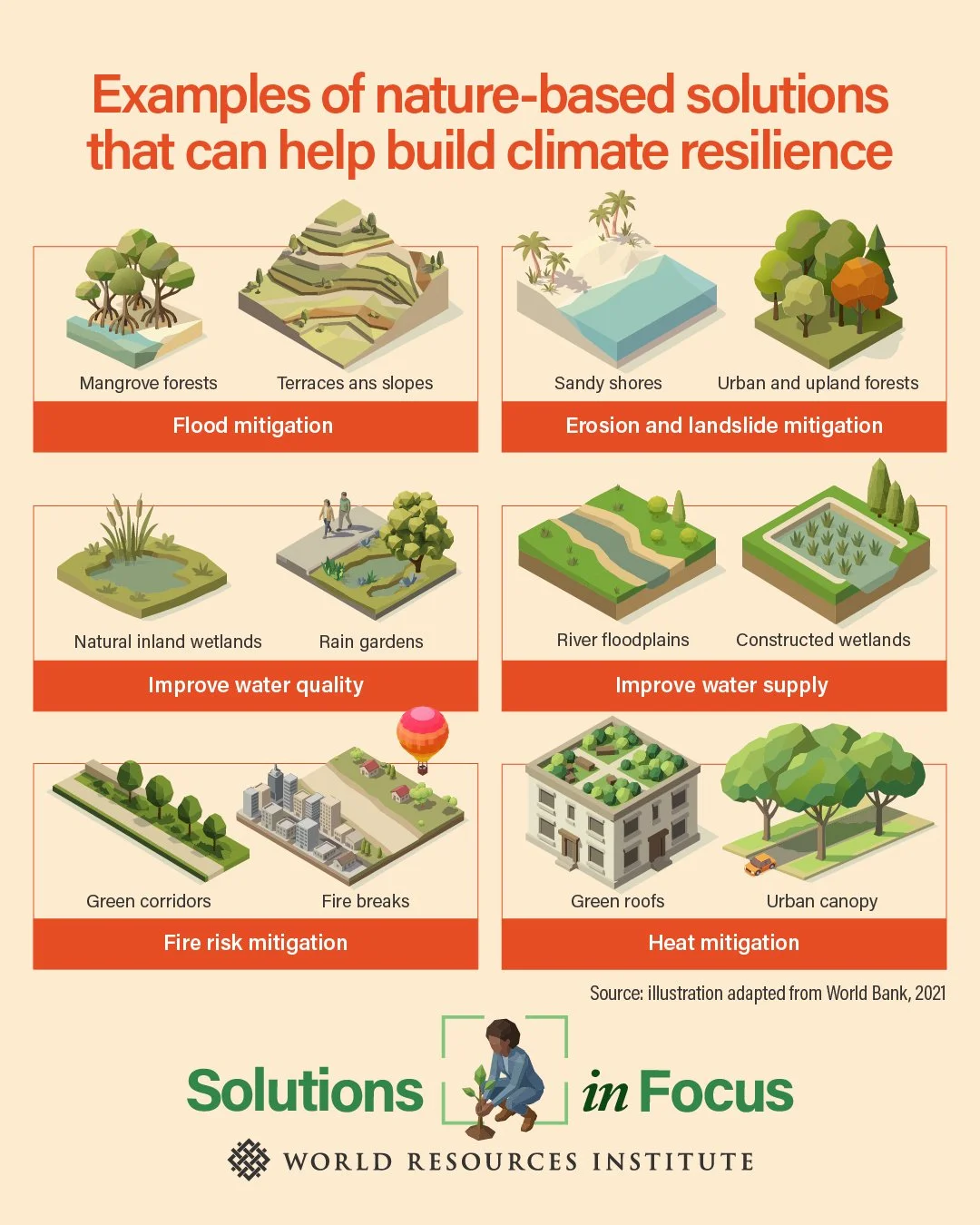
Building nature-based climate resilience goes beyond trees and includes many other green infrastucture solutions.
What is green infrastructure?
Green infrastructure incorporates the natural environment and engineered systems to manage stormwater, reduce urban heat island effects, improve air quality, offering a wide array of benefits to people, wildlife, and ecosystems. Sometimes referred to as blue-green infrastructure, this combines “blue” water management with “green” vegetation and open space management to create an interconnected network of multi-functional, climate resilient landscapes. Green infrastructure systems serve as an alternative to traditional gray or concrete infrastructure typically used to build urban environments.
Green infrastructure projects can be implemented on different scales - from a residential home, to a city building, to the broader landscape level. For homes and buildings, practices may include green roofs or balconies, rain gardens or bioswales, and rainwater harvesting systems. Communities may build shade shelters to reduce heat or install permeable pavement to ease the flow of stormwater and prevent flooding. On the larger landscape level, green infrastructure measures may involve restoring natural landscapes through wetlands, retention ponds, and other bioretention systems.
As we face increasing climate impacts like stronger storms, wind, and extreme heat, green infrastructure offers valuable solutions to help us keep urban areas cool, mitigate stormwater, prevent flooding, and decrease energy use.
What are some examples of green infrastructure?
We have wonderful examples of green infrastructure projects here in Missoula — and beyond!
Green Roof: Green roofs are roofs that are covered with vegetation and substrate that enables stormwater infiltration while reducing energy costs through cooling. In Missoula, there are green roofs on Stockman Bank downtown and on the Missoula County Ecology & Extension building. A green roof is being installed on the Missoula Public Library in late 2026.
Rain Garden: Rain gardens are depressed areas within a landscape that capture water and remove pollutants through soil filtration and plant uptake.
Bioswale: Swales are similar to rain gardens but are often found in parking lots and along curbs. They are open channels that work to slow and filter stormwater flows, and can help to lower temperatures and improve aesthetics of paved areas.
Bioretention basin: A bioretention basin is a shallow, landscaped depression used to manage stormwater runoff from impermeable surfaces. It naturally filters, slows, and cleans water by passing it through a mulch layer, engineered soil, and deep-rooted native plants before returning it to the water table. The Takima Park bioretention basin on Pattee Canyon Road captures and filters runoff and toxins and improves water quality. Native vegetation has been planted throughout the basin, providing valuable habitat for pollinators and wildlife.
Stormwater Wetland: Stormwater wetlands are constructed wetlands that remove pollutants through settling and plant uptake while providing wildlife habitat. In Missoula, the Cattail Corner Stormwater Treatment Wetland provides the removal of pollutants in the South Hills stormwater system while providing diverse wetland habitat.
Permeable Pavement: Permeable, or porous, pavements are a specific type of pavement with high porosity that allows rainwater to pass through to the ground below. This reduces further taxing storm drains.
Shade shelter: Shade shelters are outdoor structures designed to block direct sunlight and provide protection from the weather. Shade shelters can come in many different forms; some examples are structures like pavilions, gazebos, or pergolas. In Missoula, you can find larger shade structures in parks and smaller ones on Milwaukee Bike Trail along the river, the Bitterroot Branch of the bike trail, and at Rocky Mountain Gardens.
Planter boxes, green balconies, vine trellises: You can make your own green infrastructure at home, no matter the size of your residence! Putting flower planters on a porch, adding an awning or shade sail outside of a window, or creating a vine trellis with plants like hops or clematis can help create shade, cool your space, and filter rainwater.
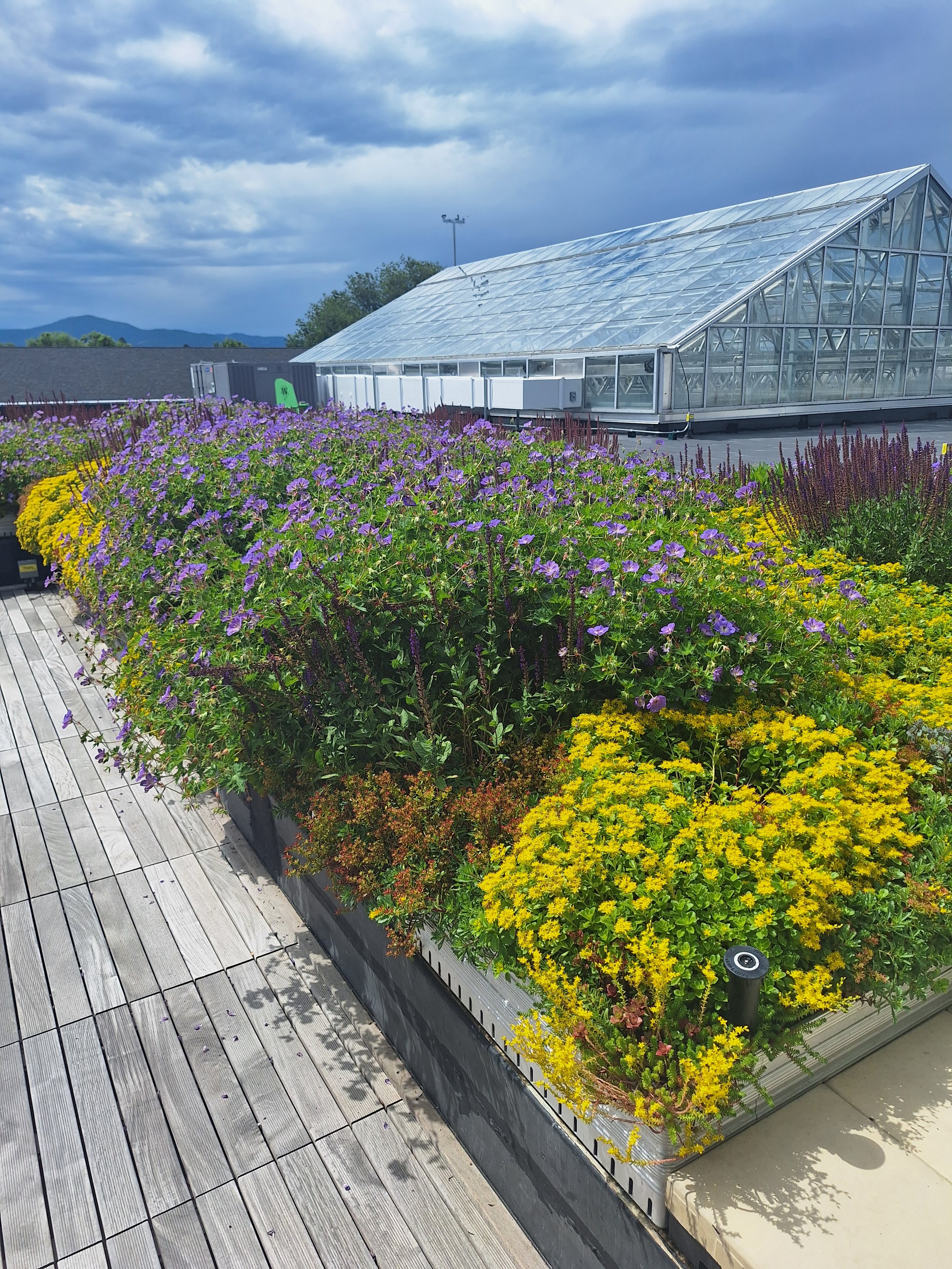
Green roof at Missoula County Ecology & Extension office (Rocky Mountain Gardens / Butterfly House)
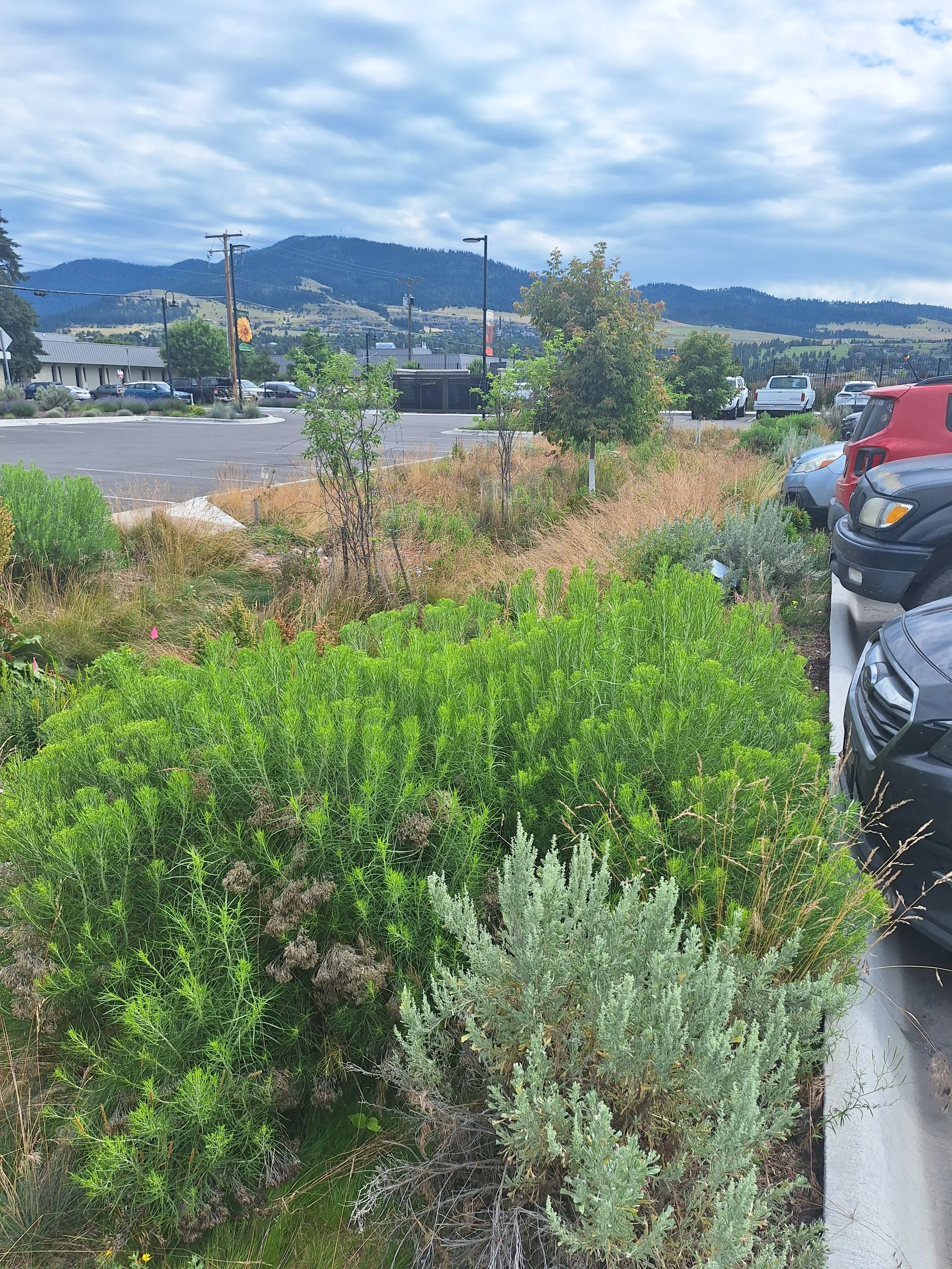
Missoula County Ecology & Extension office (Rocky Mountain Gardens / Butterfly House)
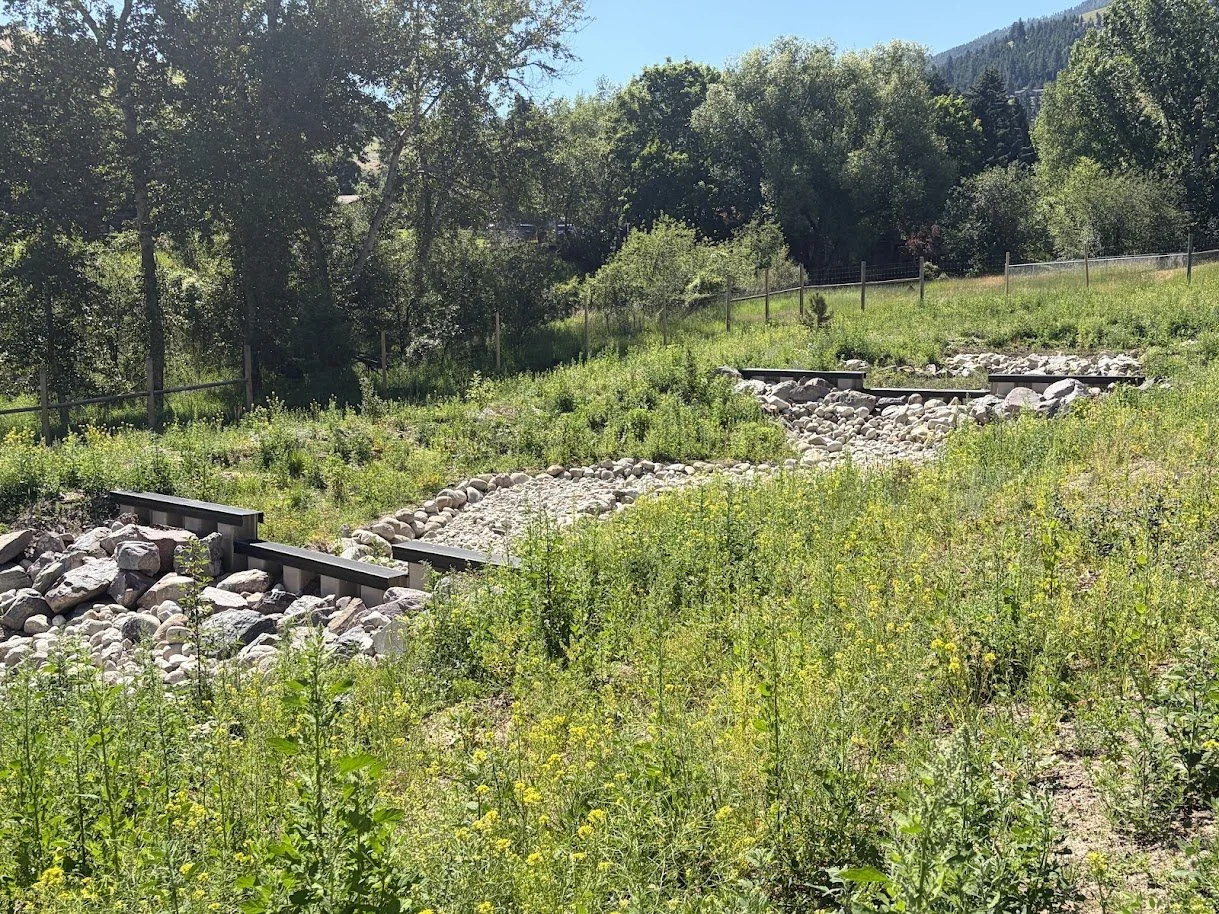
Takima Park bioretention basin
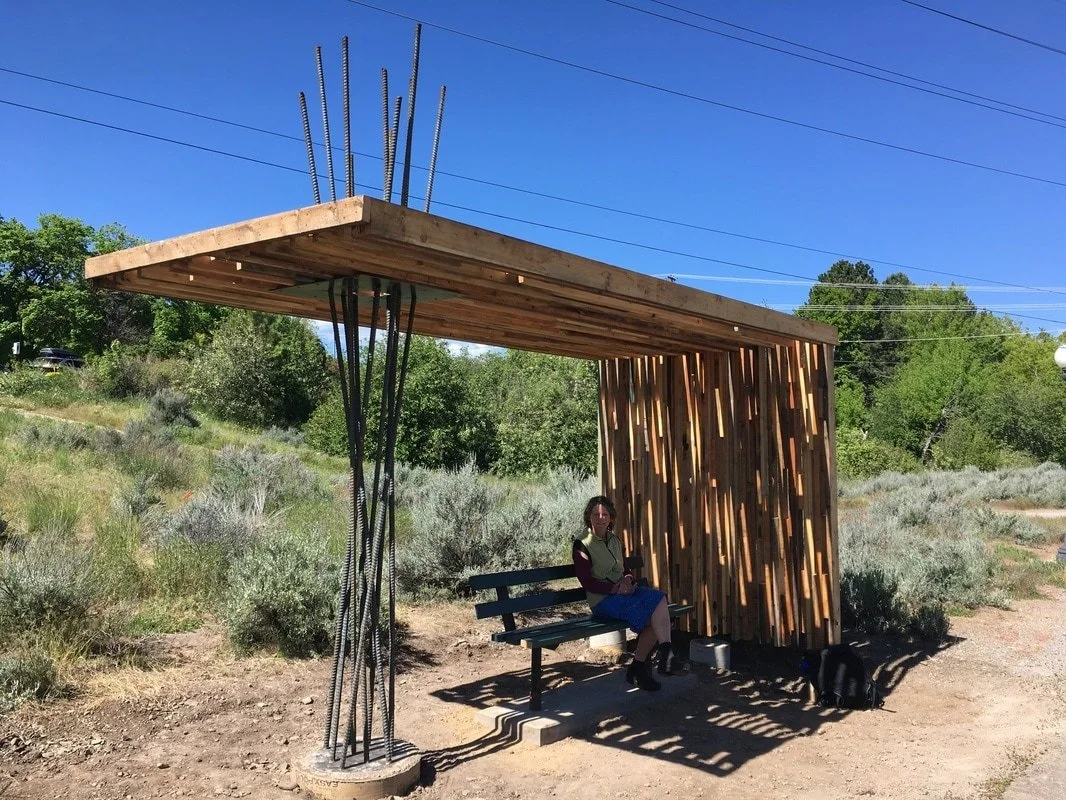
Shade shelter on the Milwaukee bike trail along the Clark Fork River. A collaborative project by MMW Architects, Home ReSource, and Climate Smart Missoula.
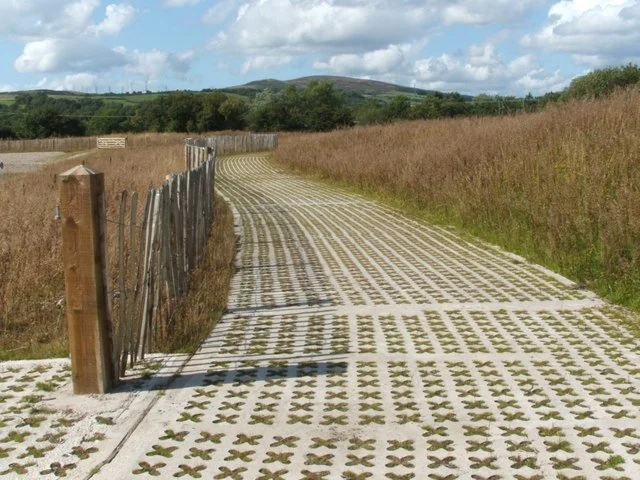
Permeable pavement walkway in the UK. Source: Wikimedia Commons
How can I explore green infrastructure further?
A few resources to learn more:
Keeping Missoula Green: Environmentally Sustainable Stormwater Management (by City of Missoula Stormwater)