Trees for Missoula promotes a sustainable, equitable, climate resilient urban forest through education, advocacy, and community engagement.
Action Alert!
Missoula City Council is in the final stages of adopting the new Unified Development Code (UDC) and this is your chance to have your voice heard!
January 23, 2026: At this stage in the UDC update, we are most concerned about City Council amendments that counter City of Missoula staff recommendations and would likely have unintended consequences. We are generally supportive of this code reform and ask Council to reject new amendments that affect landscaping and “activity area” requirements. Requirements for boulevard trees (City-owned trees in the right-of-way) are NOT at risk at this stage in the process. Some of the changes in landscaping requirements that Planning Board recommended and City Council are considering are framed as necessary to support more housing yet, if enacted, they are not likely to meaningfully increase housing supply or reduce housing costs. Instead they would reduce tree canopy, green space, and the long-term livability citywide.
We encourage you to advocate for the inclusion of strong landscaping and green infrastructure measures by sending individual emails to your City Council representatives before the City Council meeting on Monday, January 26th. If you would like to comment in person at the next City Council meeting, please contact susan@climatesmartmissoula.org.
When you email your City Council members, feel free to incorporate some of the following talking points. The first section contains background information for your consideration and the second part contains more specific language intended to encourage the preservation of strong landscaping and activity area requirements, which are currently at risk of being reduced in the UDC.
Background Information & General Comments
We appreciate City Council’s robust and dedicated efforts to get this UDC and zoning map over the finish line. We know it’s a huge lift, and we’re grateful for your thoughtfulness as you grapple with myriad opportunities, challenges and tensions (in other words, we think it is great to thank Council in your own words!)
Urban trees and landscaping have myriad climate and health benefits, help reduce urban heat islands, mitigate stormwater runoff, and are critical infrastructure for our community’s climate resilient growth and development. As we build more impervious surfaces and climate impacts become more frequent and severe, it is imperative that we offset these impacts with thoughtful implementation of green infrastructure including tree planting, tree preservation, and landscaping requirements.
Other cities across the country and around the world are implementing green infrastructure measures like green roofs, rain gardens and bioswales, and permeable pavement. Updating the code is an opportunity to enact strong landscaping requirements and will allow Missoula to join other leaders in green solutions and better prepare our community for climate impacts .
Policies set forth in community and citywide initiatives like the Parks, Recreation, Open Space & Trails Plan (PROST), Climate Ready Missoula, Stay Cool Missoula, the Urban Forestry Master Management Plan, and the Community Health Improvement Plan (CHIP) enhance climate resilience efforts and support protection of natural areas, waterways, and green spaces as well as quality of life. Incorporating strong landscaping requirements in the UDC reinforces these commitments and is essential to achieving community goals.
Specific Comments: Landscaping, Activity Areas, Greenspace, & Green Infrastructure
We can, and must, address both housing and climate resilience. Measures that increase housing units and density more equitably throughout Missoula are crucial climate solutions, AND we also need permeable green infrastructure to balance all the hard infrastructure of buildings in order to manage climate impacts that are here and projected to increase (including significant precipitation events/atmospheric rivers and more extreme heat).
Parks are crucial but not sufficient—we need green space woven throughout the urban landscape for quality-of-life benefits AND because water needs somewhere to go.
Cash-in-lieu is a critical tool that ensures park infrastructure is supported equitably as we increase density and park utilization. Please retain the option for cash-in-lieu as recommended by staff. It is a flexible and not onerously expensive option.
Please keep landscaping requirements as written (20% minimum in residential districts) and require activity areas for developments over 10 units. These are a reduction from the old Title 20 code, are designed to be flexible, forward thinking, and allow development to occur in a more efficient way. Further reductions would have significant negative impacts.
Retain parking lot landscaping requirements as recommended by staff, for the same reasons as landscaping/activity areas: green spaces are essential to compensate for concrete and asphalt as they provide significant cooling benefits, filter pollutants, and give stormwater somewhere to go.
Overall City staff have worked hard to balance competing priorities. Their recommendations consider the cumulative impacts of building development across Missoula and strongly consider equity so that those lower income residents and those most vulnerable can enjoy the benefits of green infrastructure.
MISSION & VISION
Trees for Missoula’s mission is to promote a healthier, sustainable, climate resilient urban forest through community planning, stewardship, education and advocacy.
We’re committed to executing this work through the lens of climate change. Building a climate-resilient community is one of our many efforts at Climate Smart Missoula. Urban trees are an essential piece of climate resiliency efforts, as they have the power to sequester carbon emissions and protect us against hotter temperatures and other extreme weather events.
Our goal is to build and sustain an urban forest that benefits the Missoula community. To do this, we plant and prune trees, educate residents about the benefits of urban trees and tree care, and advocate for strong urban forest policy.
To learn more about our efforts, visit our Volunteer Programs or Projects page.
To subscribe to our email list, click here. To volunteer, click here. To make a contribution, visit our Donate page.
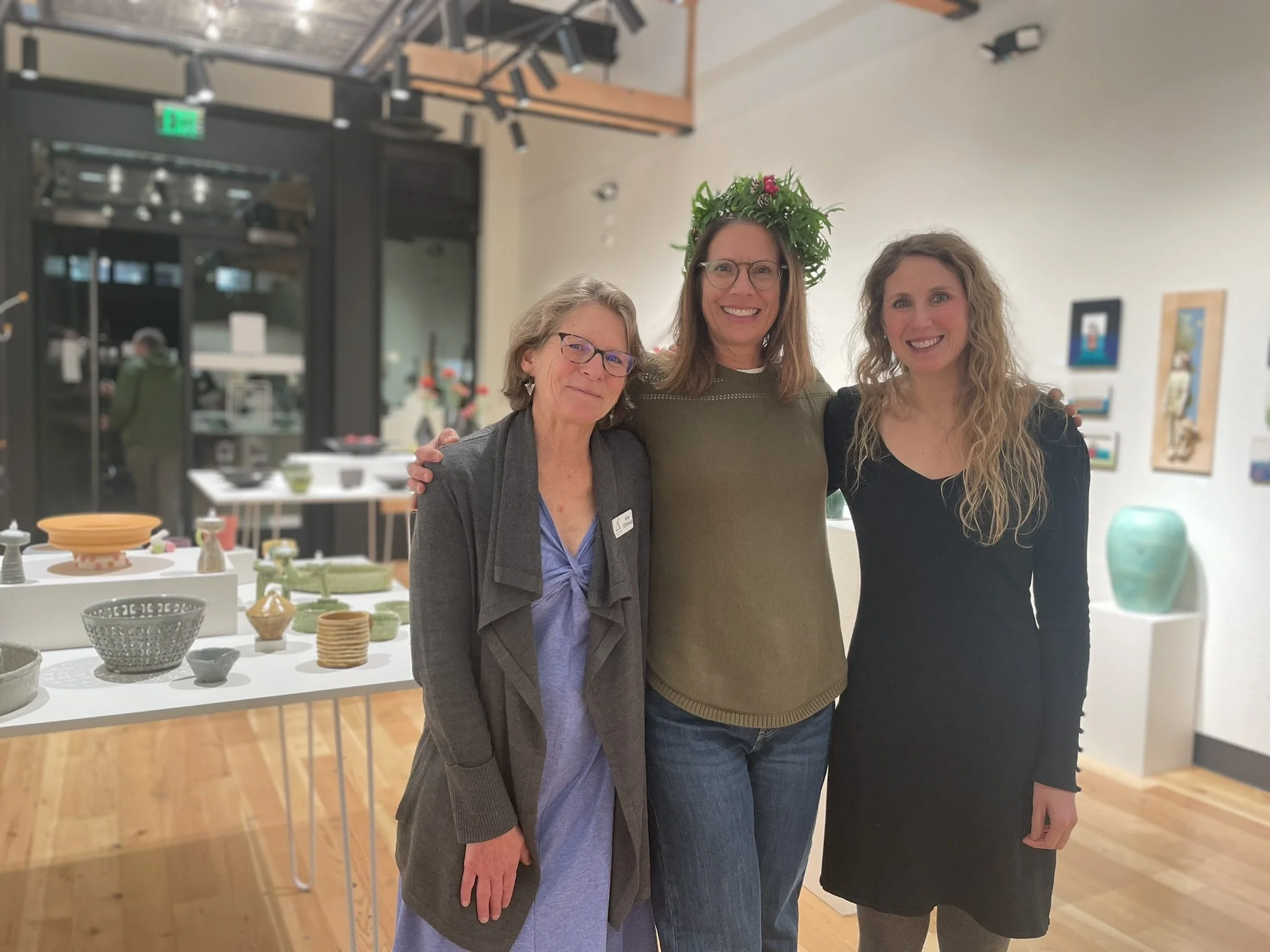
Amy Cilimburg (Climate Smart Missoula’s Executive Director), Karen Sippy (Former Executive Director of TFM) and Susan Teitelman (TMF Program Lead and Resilience Specialist, Climate Smart Missoula)